

Access an extensive, community-driven archive of English as a Second Language (ESL) PDFs, grammar cheat sheets, lesson plans, and exam study guides curated to maximize your academic performance, teaching efficiency, and language fluency. This dedicated resource library tracks the structural, phonetic, and pedagogical frameworks required to master or teach the English language globally. Whether you are an international student preparing for rigorous proficiency exams, a teacher building communicative classroom materials, or a professional refining your academic writing, these files give you instant, downloadable clarity.
The English as a Second Language (ESL) subject—often aligned with TESOL (Teaching English to Speakers of Other Languages) and EFL (English as a Foreign Language)—is a major academic and practical field dedicated to the acquisition, instruction, and systemic evaluation of the English language by non-native speakers. This discipline goes far beyond basic vocabulary drill sheets, integrating applied linguistics, cognitive psychology, and specialized instructional methodologies. Students and educators explore the intricate structural mechanics of English morphology and syntax, the phonological nuances of pronunciation and intonation, and the pragmatic rules of social and professional discourse. Studying ESL develops high-level proficiencies in cross-cultural communication, language assessment, and error analysis, which are essential for academic success in English-speaking universities and career advancement in global commerce, international relations, translation, and global education.
Our collaborative document network hosts student-shared lecture outlines, pedagogical handouts, and exam review packages organized across the distinct branches of ESL development and instruction:
The 12 English Tenses: Download clear cheat sheets breaking down the structural formulas, timelines, and usage rules for the simple, continuous, perfect, and perfect continuous aspects across past, present, and future timelines.
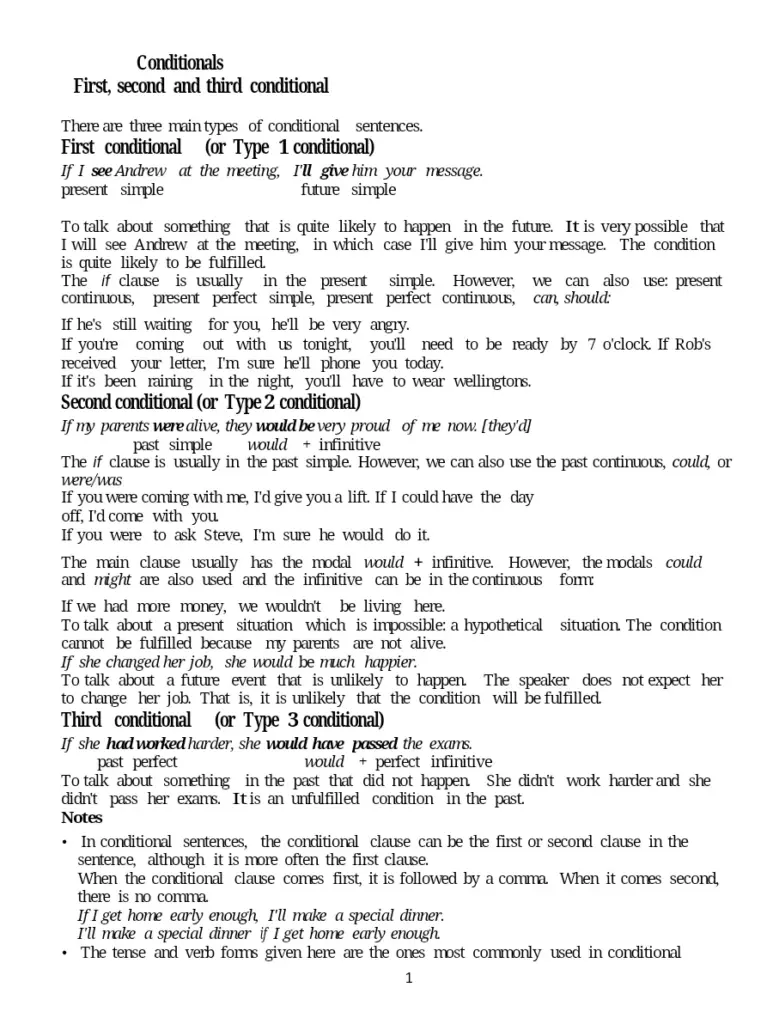
Syntactic Structures: Access dense study guides covering complex sentence construction, conditional clauses (Zero through Third), passive voice modifications, and reported speech conversions.
The Lexical Matrix: Review lists detailing high-frequency idioms, collocations, and irregular verbs, alongside comprehensive phrasal verbs list PDFs categorized by particle and semantic meaning.
Articulatory Phonetics: Download International Phonetic Alphabet (IPA) reference sheets focused specifically on the 44 distinct sounds of English, mapping vowel monographs, diphthongs, and voiced/voiceless consonants.
Suprasegmental Features: Access specialized pronunciation packets addressing word stress, sentence intonation patterns, connected speech (linking, elision), and accent reduction strategies.
International Testing Blueprints: Download test-taking strategies, essay templates, and scoring rubrics for major global English proficiency exams, featuring targeted IELTS and TOEFL exam preparation sheets.
Academic & Professional English: Access comprehensive writing guides detailing the mechanics of the five-paragraph essay, citation ethics, formal email formatting, and technical vocabulary optimization for business environments.
Lesson Planning Frameworks: Download highly effective communicative language teaching worksheets and lesson templates structured around the PPP (Presentation, Practice, Production) or ESA (Engage, Study, Activate) instructional models.
Differentiated Class Materials: Access curated reading comprehension packets, vocabulary flashcard templates, and interactive conversation prompts tailored to specific CEFR levels from A1 through C2.
| CEFR Level | General English Capability Descriptor | Core Grammatical Focus Area | Target International Exam Equivalency |
| A1 – A2 | Basic User: Simple, everyday routine communication | Present simple/continuous, basic modals, subject-verb agreement | Cambridge KET, TOEFL Primary |
| B1 – B2 | Independent User: Effective regular social & workplace interactions | Perfect tenses, relative clauses, conditional structures, passive voice | IELTS Band 5.0 – 6.5, TOEFL iBT 60 – 93 |
| C1 – C2 | Proficient User: Complex academic & highly nuanced professional discourse | Inversion, mixed conditionals, advanced cohesive devices, idioms | IELTS Band 7.0 – 9.0, TOEFL iBT 94 – 120 |
This section addresses the most frequently searched language hurdles, keyword-targeted curriculum prompts, and foundational questions sourced from ESL and TESOL university test banks.
This structural choice is one of the most common friction points for ESL learners. The Past Simple is used for actions that were completed at a specific, finished time in the past (e.g., “I lived in London in 2020”). The Present Perfect ($subject + have/has + past\ participle$), conversely, connects the past to the present moment. It is used for unspecified times, life experiences, or ongoing situations that started in the past but continue now (e.g., “I have lived in London for three years”, implying the speaker still lives there).
Phrasal verbs—combinations of a standard verb and a preposition or adverb particle (such as look up, run into, or bring up)—are difficult because they are highly idiomatic. Their meaning cannot be deduced logically by looking at the individual words alone. For example, to give up means to stop trying, which has no literal connection to the physical direction up. Furthermore, many phrasal verbs are polysemous (having multiple meanings) and possess complex syntactic rules regarding whether they can be separated by a direct object (e.g., “look the word up” vs. “look up the word”).
The Grammar-Translation method is a traditional framework focused on explicit grammatical rules, rote vocabulary memorization, and the literal translation of written texts, which often leaves learners unable to speak spontaneously. Communicative Language Teaching (CLT), the dominant modern paradigm, prioritizes functional communication. CLT shifts the focus to real-world tasks, authentic interaction, and meaningful problem-solving. Grammatical rules are often introduced inductively through context, prioritizing communicative fluency and situational appropriacy over perfect grammatical accuracy.
While both modules test the four core communication skills (Listening, Reading, Writing, and Speaking) and share identical Listening and Speaking components, they diverge sharply in Reading and Writing. The Academic module features texts and writing prompts drawn from journals, books, and academic contexts, requiring test-takers to analyze data charts or write analytical essays. The General Training module utilizes texts from everyday survival settings, advertisements, and workplace manuals, assessing basic social and professional literacy through tasks like writing formal or informal letters.
The schwa, represented by the IPA symbol /ə/, is the most common vowel sound in the English language. It is a completely neutral, unstressed vowel sound produced with a relaxed jaw and tongue (sounding like a short “uh”). Because English is a stress-timed language rather than a syllable-timed language, unstressed syllables are naturally shortened and reduced to a schwa to maintain rhythmic timing. For instance, in the word photograph /ˈfəʊ.tə.ɡrɑːf/, the middle syllable reduces to a schwa. Mastering the schwa helps ESL learners avoid a flat, robotic cadence and achieve natural, fluent sentence rhythm.
Yes. Mapping out structural grammar workflows, identifying common phonetic errors, or organizing reading comprehension questions are standard tasks for language educators and students. Our global user network frequently uploads completed lesson plan templates, grammar cheat sheets, and exam study guides to help you streamline your study or teaching prep workflow.
Every grammar matrix, phrasal verb catalog, and proficiency lesson plan across our linguistic indexes is maintained by a global network of students and educators who believe in decentralized, open educational tools. To see how these communication frameworks intersect with adjacent academic branches, psychological studies, or comparative linguistics, return to our primary Chesser Resources Browse Directory.
Ready to download premium ESL tenses cheat sheets or IELTS exam preparation packets? Join our shared academic network: navigate to your user dashboard, upload 5 of your own course outlines, lecture notes, or teaching guides, and instantly secure unrestricted access to the high-yield PDFs you need to maximize your results today.