The Sneetches by Dr. Seuss explores themes of identity, acceptance, and social inequality through the story of two groups of Sneetches: those with stars on their bellies and those without. The narrative highlights the absurdity of discrimination based on superficial differences. As the characters navigate their social dynamics, they learn valuable lessons about self-worth and the futility of trying to fit in. This timeless tale is suitable for children and adults alike, making it a perfect read for families and educators. Published in 1961, it remains relevant in discussions about diversity and inclusion.

Key Points

  • Explores themes of identity and social inequality through the Sneetches' story
  • Illustrates the absurdity of discrimination based on superficial differences
  • Teaches valuable lessons about self-worth and acceptance
  • Suitable for children and adults, fostering discussions on diversity
newtopiccyclegrowin
Author:Dr. Seuss
3 pages
Language:English
Type:Book
newtopiccyclegrowin
Author:Dr. Seuss
3 pages
Language:English
Type:Book
235
/ 3
THE SNEETCHES
by Theodor Geisel (1961)
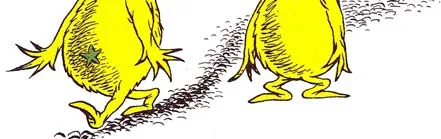
Now, the Star-Belly Sneetches
Had bellies with stars.
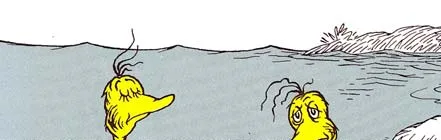
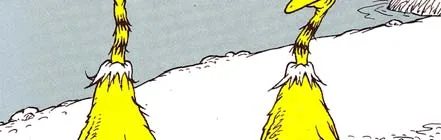
The Plain-Belly Sneetches
Had none upon thars.
Those stars weren't so big. They were really so small
You might think such a thing wouldn't matter at all.
But, because they had stars, all the Star-Belly Sneetches
Would brag, "We're the best kind of Sneetch on the beaches."
With their snoots in the air, they would sniff and they'd snort
“We'll have nothing to do with the Plain-Belly sort!"
And whenever they met some, when they were out walking,
They'd hike right on past them without even talking.
When the Star-Belly children went out to play ball,
Could a Plain-Belly get in the game...? Not at all.
You could only play if your bellies had stars
And the Plain-Belly children had none upon thars.
When the Star-Belly Sneetches had frankfurter roasts
Or picnics or parties or marshmallow toasts,
They never invited the Plain-Belly Sneetches.
They left them out cold, in the dark of the beaches.
They kept them away. Never let them come near.
And that's how they treated them year after year.
Then ONE day, it seems...while the Plain-Belly Sneetches
Were moping and doping alone on the beaches,
Just sitting there wishing their bellies had stars...
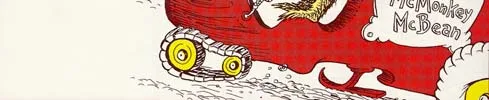
A stranger zipped up in the strangest of cars!
"My friends," he announced in a voice clear and keen,
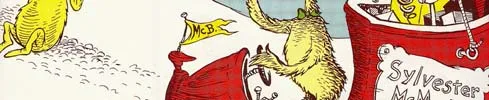
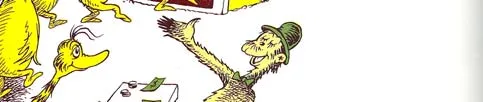
"My name is Sylvester McMonkey McBean.
And I've heard of your troubles. I've heard you're unhappy.
But I can fix that. I'm the Fix-it-Up Chappie.
I've come here to help you. I have what you need.
And my prices are low. And I work at great speed.
And my work is one hundred per cent guaranteed!"
Then, quickly, Sylvester McMonkey McBean
Put together a very peculiar machine.
And he said, "You want stars like a Star-Belly Sneetch...?
My friends, you can have them for three dollars each!”
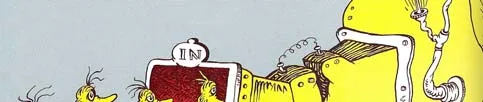
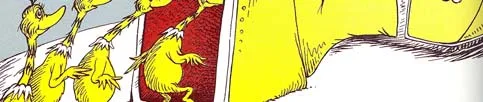
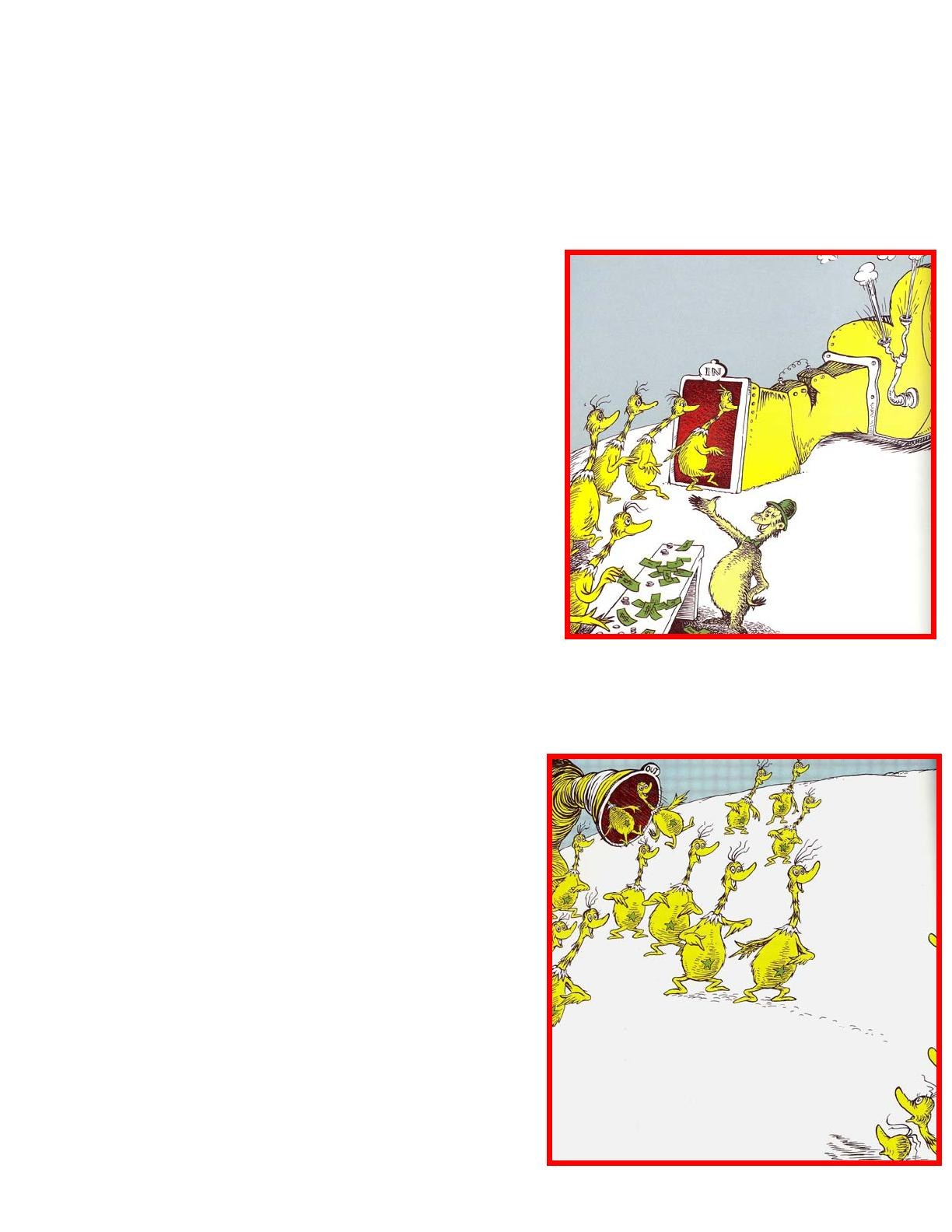
“Just pay me your money and hop right aboard!"
So they clambered inside. Then the big machine roared
And it clonked. And it bonked. And it jerked. And it berked
And it bopped them about. But the thing really worked!
When the Plain-Belly Sneetches popped out, they had stars!
They actually did. They had stars upon thars!
Then they yelled at the ones who had stars from the start,
"We're exactly like you! You can't tell us apart.
We're all just the same, now, you snooty old smarties!
And now we can go to your frankfurter parties."
"Good grief!" groaned the ones who had stars at the first.
"We're still the best Sneetches and they are the worst.
But, now, how in the world will we know," they all frowned,
"If which kind is what, or the other way round?"
Then up came McBean with a very sly wink
And he said, "Things are not quite as bad as you think.
So you don't know who's who. That’s perfectly true.
But come with me, friends. Do you know what I'll do?
I'll make you, again, the best Sneetches on beaches
And all it will cost you is ten dollars eaches.”
Belly stars are no longer in style," said McBean.
"What you need is a trip through my Star-Off machine.
This wondrous contraption will take off your stars
So you won't look like Sneetches who have them on thars."
And that handy machine
Working very precisely
Removed all the stars from their tummies quite nicely.
Then, with snoots in the air, they paraded about
And they opened their beaks and they let out a shout,
"We know who is who! Now there isn't a doubt.
The best kind of Sneetches are Sneetches without!"
Then, of course, those with stars all got frightfully mad.
To be wearing a star now was frightfully bad.
Then, of course, old Sylvester McMonkey McBean
Invited them into his Star-Off Machine.
Then, of course from then on, as you probably guess,
Things really got into a horrible mess.
All the rest of that day, on those wild screaming beaches,
The Fix-it-Up Chappie kept fixing up Sneetches.
Off again! On again!

In again! Out again!


Through the machines they raced round and about again,
Changing their stars every minute or two.
They kept paying money. They kept running through
Until neither the Plain nor the Star-Bellies knew
Whether this one was that one...or that one was this one
Or which one was what one...or what one was who.
Then, when every last cent
Of their money was spent,
The Fix-it-Up Chappie packed up
And he went.
And he laughed as he drove
In his car up the beach,
"They never will learn.
No. You can't teach a Sneetch!"
But McBean was quite wrong. I'm quite happy to say
The Sneetches got really quite smart on that day,
The day they decided that Sneetches are Sneetches
And no kind of Sneetch is the best on the beaches.
That day, all the Sneetches forgot about stars
And whether they had one, or not, upon thars.
The end.
/ 3
End of Document
235

FAQs

What is the main conflict in The Sneetches?
The main conflict in *The Sneetches* revolves around the division between the Star-Belly Sneetches and the Plain-Belly Sneetches. The Star-Belly Sneetches, who have stars on their bellies, consider themselves superior and refuse to associate with the Plain-Belly Sneetches, who lack stars. This social hierarchy leads to exclusion and discrimination, as the Star-Belly children do not allow Plain-Belly children to join in their games. The arrival of Sylvester McMonkey McBean introduces a solution that complicates the situation further.
Who is Sylvester McMonkey McBean and what does he do?
Sylvester McMonkey McBean is a character who appears in *The Sneetches* as a Fix-it-Up Chappie. He offers to help the Plain-Belly Sneetches by providing them with stars for three dollars each, claiming that he can fix their problems. After the Plain-Belly Sneetches acquire stars, the Star-Belly Sneetches become upset, leading McBean to propose another solution that involves removing the stars. His machines create chaos as the Sneetches continuously change their appearances, highlighting the absurdity of their obsession with status.
What lesson do the Sneetches learn by the end of the story?
By the end of *The Sneetches*, the characters learn a significant lesson about equality and acceptance. After experiencing the confusion and chaos caused by their attempts to differentiate themselves based on their bellies, the Sneetches realize that no kind of Sneetch is superior to another. They ultimately decide that Sneetches are just Sneetches, regardless of whether they have stars or not, promoting a message of unity and the futility of discrimination.
How do the Sneetches change throughout the story?
Throughout *The Sneetches*, the characters undergo a transformation in their understanding of identity and social status. Initially, the Star-Belly Sneetches are proud and exclusive, while the Plain-Belly Sneetches feel inferior. After the intervention of Sylvester McMonkey McBean, both groups experience confusion as they switch between having stars and not having them. Ultimately, they come to realize that their differences are superficial and that they should embrace their shared identity as Sneetches, leading to a more inclusive community.
What events lead to the Sneetches' realization about their differences?
The events leading to the Sneetches' realization about their differences begin when the Plain-Belly Sneetches, feeling left out, visit Sylvester McMonkey McBean. After gaining stars, they initially celebrate their newfound similarity to the Star-Belly Sneetches. However, the ensuing chaos from the constant switching between having stars and not leads to confusion about identity. This culminates in the understanding that their worth is not defined by their appearance, prompting them to reject the idea of superiority based on superficial traits.