Macbeth, a tragedy by William Shakespeare, explores themes of ambition, power, and guilt through the story of a Scottish nobleman. The play follows Macbeth's rise to power after receiving a prophecy from three witches, leading him to commit regicide and ultimately face dire consequences. Set in Scotland, the narrative delves into the psychological turmoil of Macbeth and Lady Macbeth as they grapple with their actions. This classic work is essential for students studying Shakespearean literature, providing insights into human nature and moral dilemmas. Ideal for literature enthusiasts and scholars alike, Macbeth remains a pivotal text in understanding the complexities of ambition and morality.

Key Points

  • Explores the themes of ambition and moral conflict in Shakespeare's Macbeth
  • Follows Macbeth's transformation from a noble warrior to a tyrannical ruler
  • Features iconic characters such as Lady Macbeth and the three witches
  • Set against the backdrop of Scotland, highlighting the impact of prophecy on fate
newtopiccyclegrowin
Author:William Shakespeare
69 pages
Language:English
Type:Book
newtopiccyclegrowin
Author:William Shakespeare
69 pages
Language:English
Type:Book
75
/ 69
1
Macbeth PDF
A full version of William Shakespeare’s Macbeth text
NoSweatShakespeare.com
Making Shakespeare easy and accessible
2
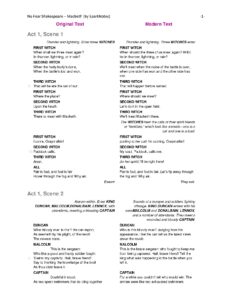
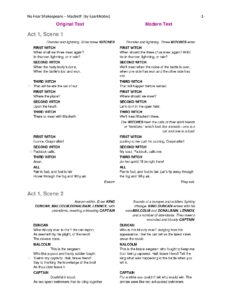
ACT I
SCENE I. A desert place.
Thunder and lightning. Enter three Witches
First Witch
When shall we three meet again
In thunder, lightning, or in rain?
Second Witch
When the hurlyburly's done,
When the battle's lost and won.
Third Witch
That will be ere the set of sun.
First Witch
Where the place?
Second Witch
Upon the heath.
Third Witch
There to meet with Macbeth.
First Witch
I come, Graymalkin!
Second Witch
Paddock calls.
Third Witch
Anon.
ALL
Fair is foul, and foul is fair:
Hover through the fog and filthy air.
Exeunt
SCENE II. A camp near Forres.
Alarum within. Enter DUNCAN, MALCOLM, DONALBAIN, LENNOX, with Attendants,
meeting a bleeding Sergeant
DUNCAN
What bloody man is that? He can report,
As seemeth by his plight, of the revolt
The newest state.
MALCOLM
This is the sergeant
Who like a good and hardy soldier fought
'Gainst my captivity. Hail, brave friend!
Say to the king the knowledge of the broil
As thou didst leave it.
Sergeant
Doubtful it stood;
As two spent swimmers, that do cling together
And choke their art. The merciless Macdonwald--
Worthy to be a rebel, for to that
The multiplying villanies of nature
3
Do swarm upon him--from the western isles
Of kerns and gallowglasses is supplied;
And fortune, on his damned quarrel smiling,
Show'd like a rebel's whore: but all's too weak:
For brave Macbeth--well he deserves that name--
Disdaining fortune, with his brandish'd steel,
Which smoked with bloody execution,
Like valour's minion carved out his passage
Till he faced the slave;
Which ne'er shook hands, nor bade farewell to him,
Till he unseam'd him from the nave to the chaps,
And fix'd his head upon our battlements.
DUNCAN
O valiant cousin! worthy gentleman!
Sergeant
As whence the sun 'gins his reflection
Shipwrecking storms and direful thunders break,
So from that spring whence comfort seem'd to come
Discomfort swells. Mark, king of Scotland, mark:
No sooner justice had with valour arm'd
Compell'd these skipping kerns to trust their heels,
But the Norweyan lord surveying vantage,
With furbish'd arms and new supplies of men
Began a fresh assault.
DUNCAN
Dismay'd not this
Our captains, Macbeth and Banquo?
Sergeant
Yes;
As sparrows eagles, or the hare the lion.
If I say sooth, I must report they were
As cannons overcharged with double cracks, so they
Doubly redoubled strokes upon the foe:
Except they meant to bathe in reeking wounds,
Or memorise another Golgotha,
I cannot tell.
But I am faint, my gashes cry for help.
DUNCAN
So well thy words become thee as thy wounds;
They smack of honour both. Go get him surgeons.
Exit Sergeant, attended
Who comes here?
Enter ROSS
MALCOLM
The worthy thane of Ross.
LENNOX
What a haste looks through his eyes! So should he look
That seems to speak things strange.
ROSS
God save the king!
/ 69
End of Document
75

FAQs

What are the key themes in Macbeth?
The key themes in *Macbeth* include ambition, guilt, and the supernatural. Ambition drives Macbeth to commit regicide in his quest for power, leading to his eventual downfall. Guilt manifests through both Macbeth and Lady Macbeth, resulting in madness and despair as they grapple with the consequences of their actions. The supernatural elements, such as the prophecies of the witches, play a crucial role in influencing Macbeth's decisions and foreshadowing his tragic fate.
How does Macbeth's character change throughout the play?
Macbeth undergoes significant transformation from a noble warrior to a tyrannical ruler. Initially, he is portrayed as brave and honorable, praised for his valor in battle. However, after encountering the witches and receiving their prophecies, his ambition ignites, leading him to murder King Duncan. As the play progresses, Macbeth becomes increasingly paranoid and ruthless, committing further atrocities to secure his power, ultimately resulting in his isolation and demise.
What role do the witches play in Macbeth?
The witches, or the Weird Sisters, serve as catalysts for Macbeth's actions and embody the theme of the supernatural. They prophesy that Macbeth will become king, igniting his ambition and setting him on a path of destruction. Their cryptic messages manipulate Macbeth and Banquo, leading to a series of events that culminate in tragedy. The witches represent fate and the chaos that ensues when individuals attempt to control their destiny.
What is the significance of Lady Macbeth's sleepwalking scene?
Lady Macbeth's sleepwalking scene is significant as it reveals her deep-seated guilt and psychological unraveling. While sleepwalking, she attempts to wash the imagined bloodstains from her hands, exclaiming, 'Out, damned spot!' This moment illustrates her overwhelming remorse for her role in Duncan's murder and the subsequent chaos. It highlights the theme of guilt and the psychological consequences of their ambitious actions, contrasting her earlier ruthlessness with her current state of despair.
How does the motif of blood function in Macbeth?
The motif of blood in *Macbeth* symbolizes guilt and the consequences of violence. After murdering Duncan, Macbeth is haunted by the blood on his hands, expressing that he will 'sleep no more.' This imagery underscores the psychological torment that follows their heinous acts. Blood also represents the idea of honor and betrayal, as characters grapple with the moral implications of their actions throughout the play.
What events lead to Macbeth's downfall?
Macbeth's downfall is precipitated by several key events, starting with the witches' prophecies that spark his ambition. Following Duncan's murder, Macbeth becomes increasingly tyrannical, committing further murders to secure his throne. His paranoia alienates him from allies, leading to rebellion. Ultimately, the prophecy that he cannot be harmed by anyone born of a woman is fulfilled when Macduff confronts him, revealing the tragic irony of his overconfidence and misinterpretation of fate.
What is the relationship between Macbeth and Banquo?
Macbeth and Banquo share a complex relationship characterized by friendship and rivalry. Initially, they are comrades in battle, with Banquo serving as a foil to Macbeth's ambition. However, after the witches prophesy that Banquo's descendants will be kings, Macbeth's jealousy and fear lead him to plot Banquo's murder. This betrayal marks a turning point in their relationship, illustrating themes of ambition, loyalty, and the corrupting influence of power.